$9B+
U.S. utility vegetation management market in 2024, growing toward $18B by 2032 at over 10% CAGR.
fortunebusinessinsights.com
Utility vegetation management is a $9B industry with a worsening labor shortage, a compounding safety record, and regulatory pressure that isn't easing. SR-01 is being developed with this market in mind.
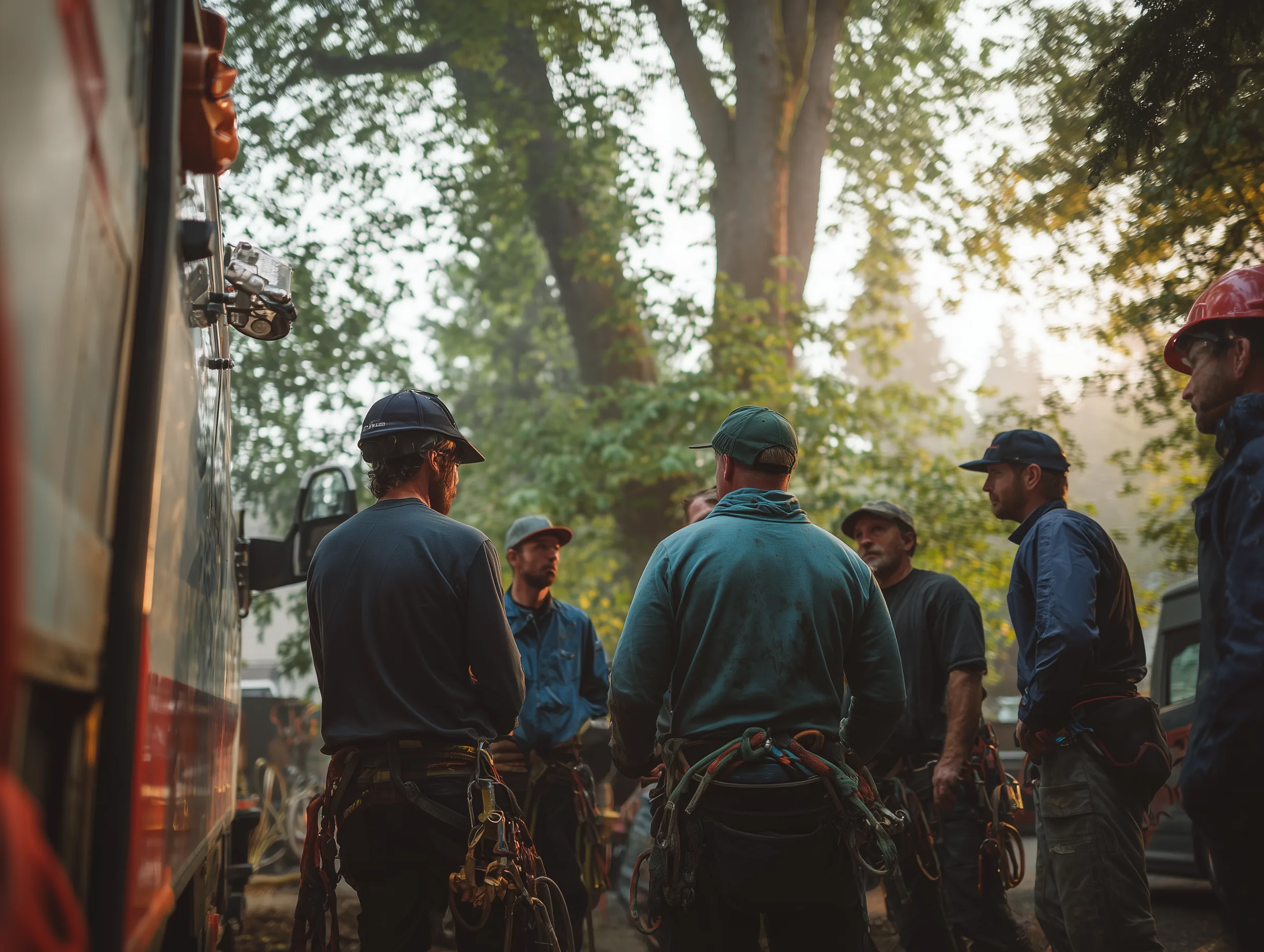
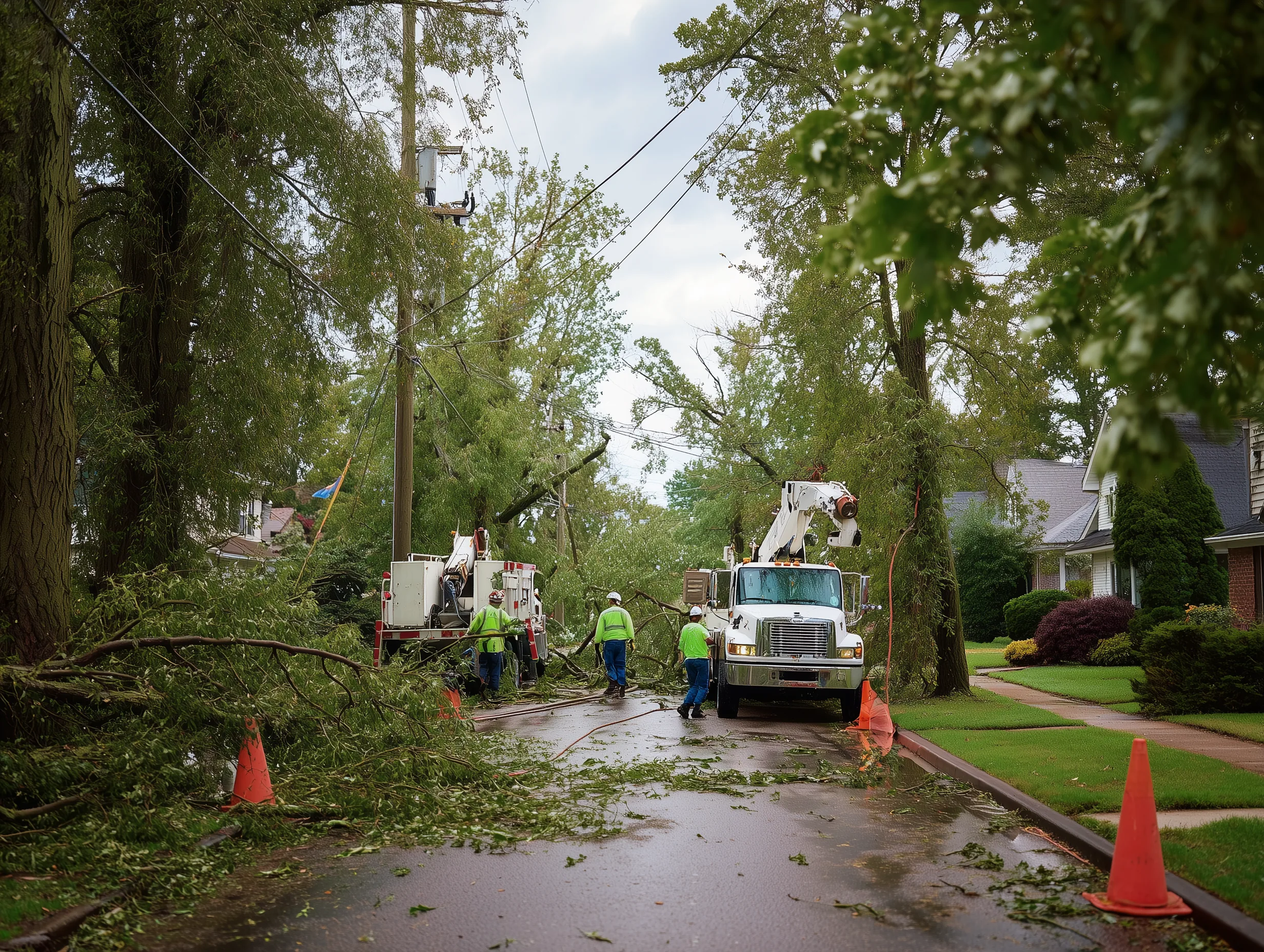
Extreme weather, grid expansion, and tightening NERC reliability standards are driving more and more vegetation management work. The volume of right-of-way miles requiring active management grows every year. The workforce available to do it doesn't.
The most experienced UVM arborists — those with 15 or more years of knowledge about canopy behavior, line clearance, and complex removals — are retiring. Half a decade of institutional knowledge walks out of the industry every time a senior operator does.
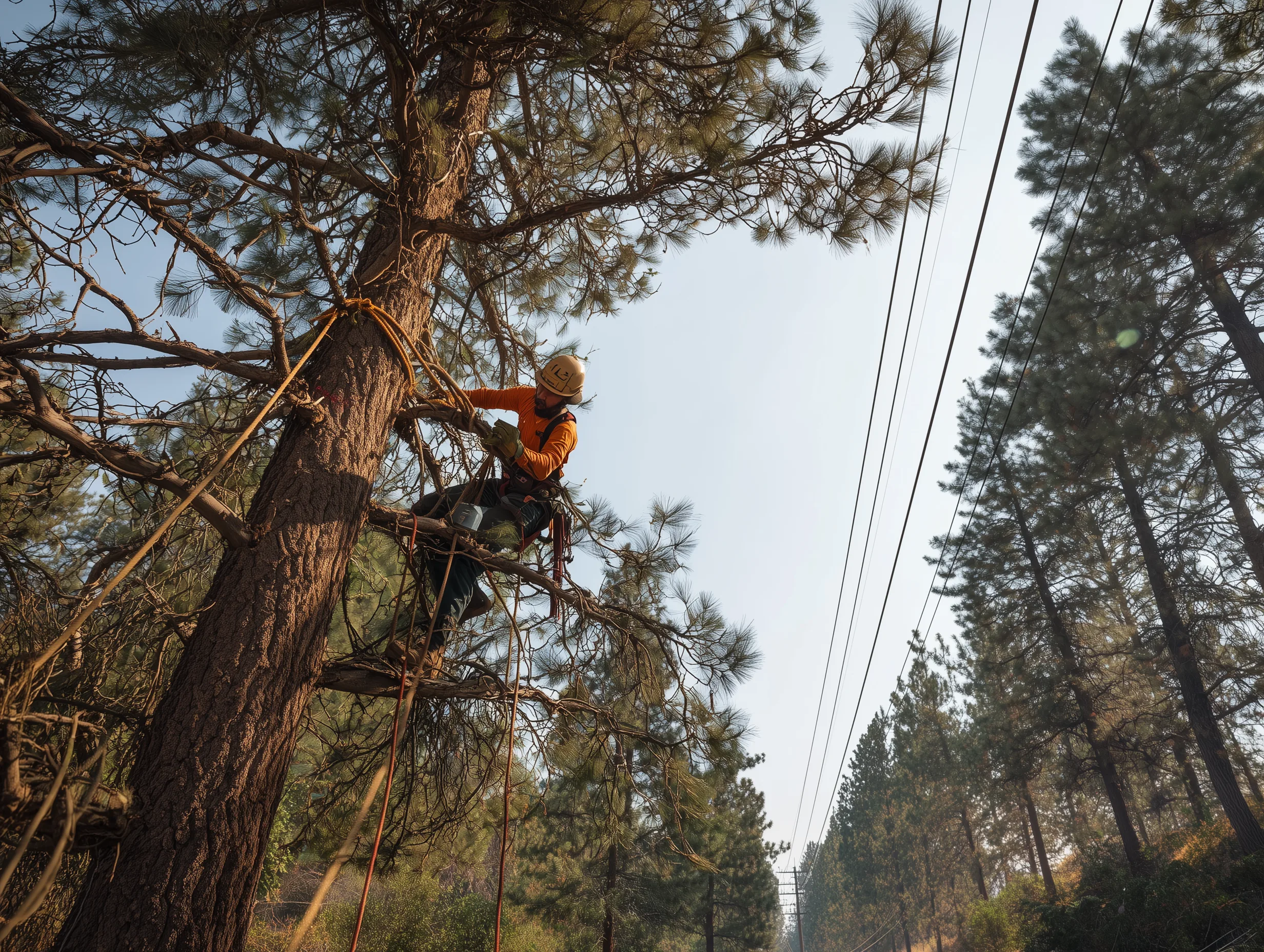
Meanwhile, the work near energized infrastructure has never been more physically demanding, or more dangerous. Electrocution is among the leading causes of fatal incidents in tree work, and a significant proportion of those occur during line-clearance operations.
UVM contractors operating at scale — managing hundreds of crews across utility ROW miles — face the same pressure from both sides: utilities demanding faster cycle times and higher reliability, and a shrinking pool of qualified climbers to deliver it.
SR-01 is designed to reduce the need for a climber in the highest-risk canopy positions, particularly on dead or compromised trees adjacent to energized lines where the consequence of an incident is highest.
Utilities are ultimately accountable for the safety of the contractor crews performing vegetation work under their agreements. A serious incident in a line-clearance operation creates liability, regulatory exposure, and reputational risk — regardless of where it sits in the contracting chain.
SR-01 represents a category of solution the UVM industry has not previously had access to: a ground-based system that performs canopy cuts without placing a climber in the highest-risk position on the job.
SR-01's core design principle — teleoperation from the ground at all times — directly addresses the highest-risk scenario in line-clearance work: a climber ascending near an energized conductor. The operator stays on the ground. The robot goes up.
SR-01 clips onto a standard arborist rope thrown by your crew — no specialist rigging, no separate infrastructure. The same crew, the same lines, the same workflow — with a robot handling the canopy position instead of a climber.
On-board sensors log operational data across every deployment. For utilities managing vegetation programs across thousands of ROW miles, this creates an audit trail that manual operations cannot provide.
With SR-01, the high-canopy cut no longer requires your most experienced line-clearance climber. A ground operator — trained on-site — controls the system. Your senior arborists can supervise more positions simultaneously, multiplying their impact per shift.
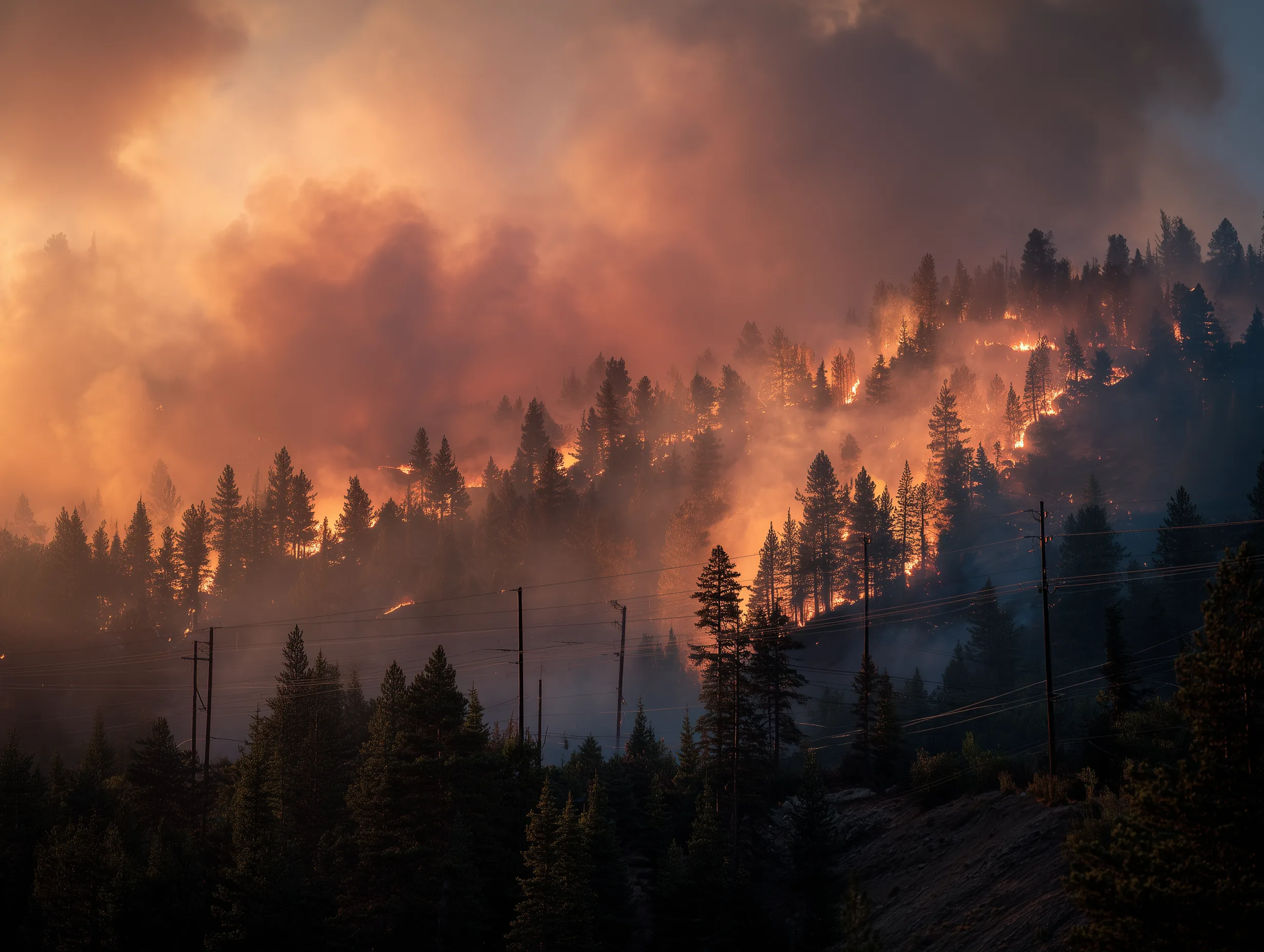
A 2022 California State Auditor review found that utility-reported fire incidents from 2015 through 2020 were frequently caused by power lines contacting foreign objects, especially vegetation. The same report also cites Cal Fire data showing that vegetation contact accounted for 74% of all acres burned by electrical power-caused wildfires from 2018 through 2020.
That means the wildfire problem is not just about incident count. It is about exposure when a clearance miss happens in the wrong terrain, under the wrong weather, with the wrong line condition. A small number of vegetation failures can produce outsized land loss, regulatory scrutiny, and public liability.
Bucket trucks need road access. Climbers need time, safe entry positions, and repeat setups. In steep, remote, or road-limited corridors, the clearance positions that matter most can become the ones that are easiest to postpone. That is where wildfire exposure compounds.
SR-01 is being developed around those conditions: rope-based access, operation from the ground, and fast resets from one position to the next. For utilities and contractors managing vegetation cycles in difficult terrain, that changes how many high-risk positions a crew can realistically clear in a day and how often the hardest spans get skipped.
OSHA distinguishes sharply between standard arborist crews and utility line-clearance personnel. Under 1910.333, unqualified workers must stay outside the minimum approach distance for energized overhead lines, which starts at 10 feet on systems at 50 kV and below. Under 1910.269, line-clearance tree trimmers can work closer only with specialized training, safe positioning, and insulated tools.
That means the limiting factor is not that every vegetation job must be de-energized. It is that hazardous cuts near energized conductors require the right crew, the right utility coordination, and a working position that can be maintained safely. When those conditions are not available, the climber has to stay down or the job has to be reassigned to a different method.
When the canopy position is too close to energized infrastructure for a standard arborist crew to maintain safe distances, the work usually has to shift into a more complex operating mode: utility coordination, a qualified line-clearance crew, additional protective equipment, or a different work method altogether. That slows scheduling, narrows who can take the job, and raises the cost of getting the cut completed safely.
OSHA's minimum approach distance rules are written to protect people. When SR-01 performs the canopy cut from the rope position, the system is designed to remove the worker from the highest-risk location. That does not eliminate utility rules or site-specific judgment, but it does change the safety constraint that often makes difficult line-adjacent cuts slower, more specialized, or impractical for a standard crew.
NERC's FAC-003-4 standard requires transmission vegetation programs to maintain clearances that prevent contact-related outages, with fines of up to $1 million per violation per day. The faster utilities can complete ROW cycles without de-energization delays, the lower their compliance exposure.
Qualified line-clearance arborists are scarce and expensive. SR-01 is being developed to let more of the work be handled from the ground, which may reduce how often specialized line-clearance staffing is needed, depending on utility rules, site conditions, and the final operating procedure.
Standard arborist rope is non-conductive under normal conditions. But near energized infrastructure, normal conditions aren't guaranteed. Water — from rain, morning moisture, or wet foliage — can turn a rope into a conduction path. It's a known risk in line-clearance work, and one the industry largely manages through protocol rather than elimination.
In current SR-01 pilot operations, a crew member throws and clips the rope — the same process used in standard arborist workflows today. That contact point is something we're actively designing out. We're developing a deployment system where no human needs to physically handle the rope once it's in the tree, keeping every crew member fully clear of any potential conduction path from canopy to ground, regardless of weather or environmental conditions.
The goal is straightforward: the worst-case scenario with SR-01 should be a damaged or non-recoverable robot. That's a cost we can absorb. A human conduction injury is not.
“Urban forestry is hazardous work and doing that work — climbing trees — is constantly figuring out how to get the job done while mitigating hazards from a very exposed position aloft in the tree.”
Peter Fixler — Paul W. Meyer Chief Arborist, Morris Arboretum of the University of PennsylvaniaSR-01 is currently in commercial arborist pilot deployment. We're actively speaking with UVM contractors and utilities about evaluation opportunities. Reach out directly — no pitch deck, no hard sell.